

Introduction: The Future of SEO Content Is Here
SEO content has evolved radically. It’s no longer enough to rank on Google; now you need your content to be the first choice for ChatGPT, Bard, and other language models that answer millions of queries daily.
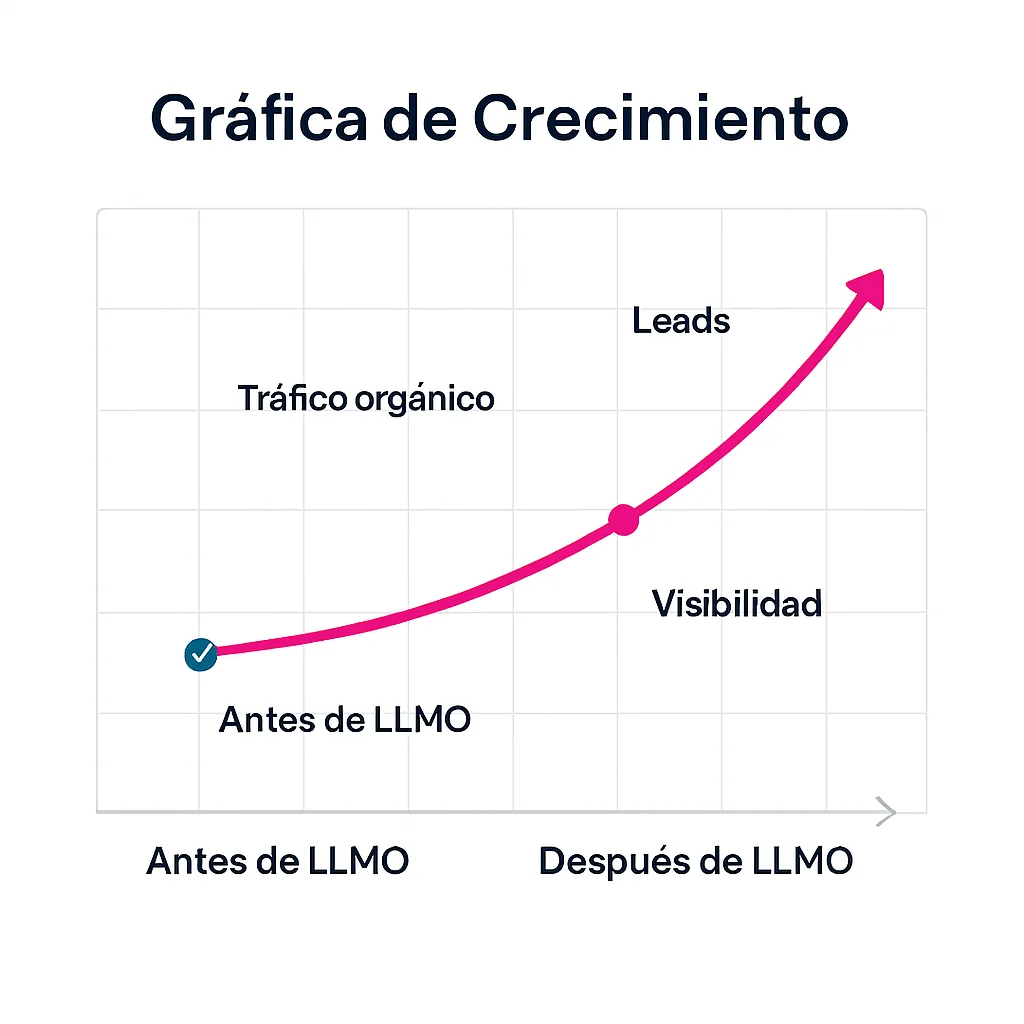
Companies that are dominating this new era of content marketing have discovered a secret: creating content that satisfies both traditional algorithms and generative artificial intelligence. This dual approach is generating extraordinary results in visibility and conversions.
Do you want your content to be the AI’s preferred answer while maintaining your ranking on traditional search engines? Discover how your website is optimized for language models. Request your free LLMO analysis here.
What is SEO Content Optimized for LLMOs?
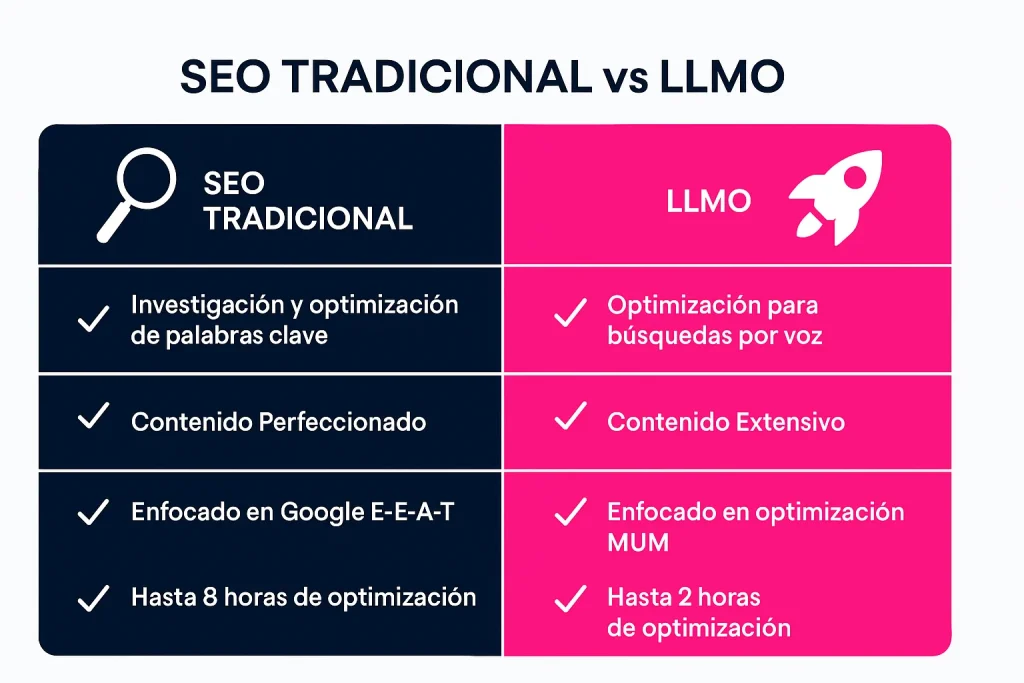
Modern SEO content must function in two ecosystems simultaneously: traditional search engines and generative language models. This duality requires a strategic approach that combines proven SEO techniques with AI-specific optimizations.The Three Dimensions of Modern SEO Content
Traditional Technical Optimization: Includes keywords, meta tags, HTML structure, and links that Google crawlers process efficiently.
Language Model Optimization: Considers direct answers, clear context, and conversational structure that LLMs can interpret and quote.
Conversion Optimization: Integrates CRO elements that convert visitors into leads, regardless of their traffic source.
This triple optimization is transforming the digital marketing landscape, creating unprecedented opportunities for brands that adopt these methodologies early.
Content Marketing Strategies for Generative Search
Conversational and Direct Writing
AI models prioritize content that answers questions naturally. Your SEO content should include phrases like “The answer is,” “This means that,” or “In simple terms.”
Voice searches are growing exponentially. Users are asking “How to create effective SEO content?” instead of searching “create SEO content.” Your content should reflect this linguistic shift.
Hierarchical Information Structure
Large Language Models process content organized in layers of information more efficiently:- Direct response in the first paragraphs
- Context and explanation in middle sections
- Technical details in specific subsections
- Practical examples strategically placed

Technical Optimization: Keywords and LSI Semantics
Natural Keyword Distribution
Modern SEO content optimization requires organic keyword distribution. AI models detect keyword stuffing more efficiently than Google, penalizing over-optimized content.Recommended secondary keywords:
- Content optimization
- Content Marketing
- Digital content strategy
- SEO copywriting
- Content strategy
- SEO Writing
- Web positioning
- Digital Marketing
Latent Semantics and Context
Today’s algorithms understand complex semantic relationships. Your SEO content should naturally include related terms: algorithms, SERP, engagement, conversions, lead generation, inbound marketing. This semantic richness strengthens topical relevance for both traditional search engines and generative models.CRO Elements Integrated into SEO Content
Conversion Psychology in SEO Content
Effective content marketing combines valuable information with subtle persuasive elements. Users are looking for solutions, not just information.Proven CRO Techniques:
- Social Proof: References to success stories and up-to-date statistics
- Subtle Urgency: Mentions of changing market trends
- Clear Benefits: Specific results readers can expect
- Credibility: Links to authoritative sources and verifiable data
Micro-conversion optimization
Each section of your SEO content should guide the user toward the next logical step. This natural progression improves both the user experience and the engagement metrics that algorithms value. Strategically placed contact forms can increase conversions by up to 40% without negatively impacting SEO, according to recent studies by HubSpot and Content Marketing InstituteMetrics and KPIs to Measure the Success of SEO Content
Traditional Metrics vs. LLMO Metrics
- Ranking for Target Keywords
- Organic Traffic and CTR
- Time Spent and Pages Per Session
- Inbound Links and Mentions
Métricas LLMO emergentes:
- Frequency of citation in AI responses
- Appearances in featured snippets and knowledge panels
- Traffic from conversational searches
- Engagement on AI platforms
Updated Measurement Tools
Traditional tools like Google Analytics and Search Console remain essential, but you need to supplement them with new metrics specific to content optimization in the age of AI. Emerging platforms are developing dashboards specifically for LLMO, allowing you to monitor how language models interact with your content. Do you need to implement an LLMO metrics system in your company? As specialized SEO consultants, we can design a customized dashboard for your business and optimize your content strategy. Translated with DeepL.com (free version)