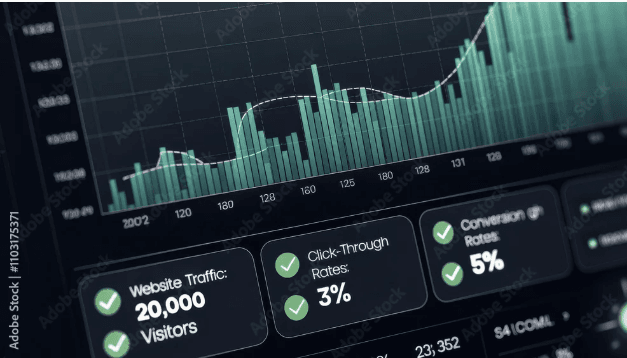


Google Ads’ Ad Strength has become a key metric for optimizing campaigns and leveraging the full potential of responsive ads and performance max. More than just an indicator, it signals how well-prepared your ads are to compete in an automated, competitive, and constantly evolving environment.
In this advanced guide, we teach you how to improve Ad Strength, what practices to implement, mistakes to avoid, and how to align this metric with your business objectives to achieve real results.

What is Ad Strength and why is it important?
Ad Strength is a metric that evaluates the relevance, diversity, and quality of assets (text, images, videos, extensions, etc.) in your Google Ads campaigns. The rating ranges from “Poor” to “Excellent”, and its purpose is to help you create more effective ads.
“Google has confirmed that ads with a higher Ad Strength are more likely to achieve better results, including higher click-through rates (CTR), better quality scores, and in many cases, lower cost per acquisition (CPA).”
Furthermore, good Ad Strength not only impacts the immediate performance of your campaigns, but also contributes to a better user experience, greater brand visibility, and a higher return on investment (ROI).
How Google Ads interprets Ad Strength
Google combines several elements to evaluate Ad Strength:
- Number and variety of titles and descriptions
- Inclusion of relevant keywords
- Use of visual assets (images, videos, logos)
- Possible ad combinations in responsive campaigns
- Expected performance based on similar campaigns
- Frequency and turnover rate of effective assets
- Adaptability to different audience segments and devices
Other factors considered include the level of personalization, location, and semantic consistency between titles and descriptions. Google’s engine looks for signals that suggest the ad is not only relevant but also useful to the user in that specific context.
A high Ad Strength indicates that your ad is flexible, relevant, and well-prepared to compete with others within the same auction.
What happens if you ignore Ad Strength?
Ignoring this metric can result in a significant loss of opportunities and budget. A low Ad Strength score indicates that your ad has little variation or relevance, which could lead to:
- Less exposure
- Higher cost per click
- Lower quality score
- Lower conversion volume
- Worse performance in ad auctions
- Lower chance of competing in Performance Max
Furthermore, if your assets aren’t diverse enough, Google’s system has less data to optimize performance. This leaves you out of valuable combinations that could be crucial for certain audiences or devices. It also limits automated learning and slows down the growth of your campaigns.

How Ad Strength Impacts Different Industries
Ecommerce
- Up to 28% increase in conversions
- Greater relevance in competitive searches
- Improved CTR and CPC
- Direct benefit in remarketing and abandoned carts
B2B and professional services
- More quality clicks with specific keywords such as B2B digital consulting
- Better segmentation by location, sector, and job title
- Content better suited to long decision-making processes
- Improved perception of authority and trust
Education and training
- Greater user interest in relevant programs
- Use of titles such as: “Online Digital Marketing Certification Course”
- Better connection with younger audiences and mobile-friendliness
- Optimized registration and report request campaigns
How to use predictive analytics to improve ad strength
Predictive analytics allows you to forecast which combinations of assets will perform best. Use tools like BigQuery, Google Analytics 4, or Looker Studio to analyze:
- Headline Length
- Effectiveness by Sector or Audience
- Estimated CTR by Combination
- Trends by Date, Time, and Geographic Location
- Correlation between Ad Strength and ROI
You can also apply simple regression or clustering models to identify patterns of behavior and suggest new data-driven approaches.
An advanced strategy can include automated dashboards that prioritize combinations with the highest conversion potential before activating them. This allows for more strategic launches and minimizes the risks of the initial investment.
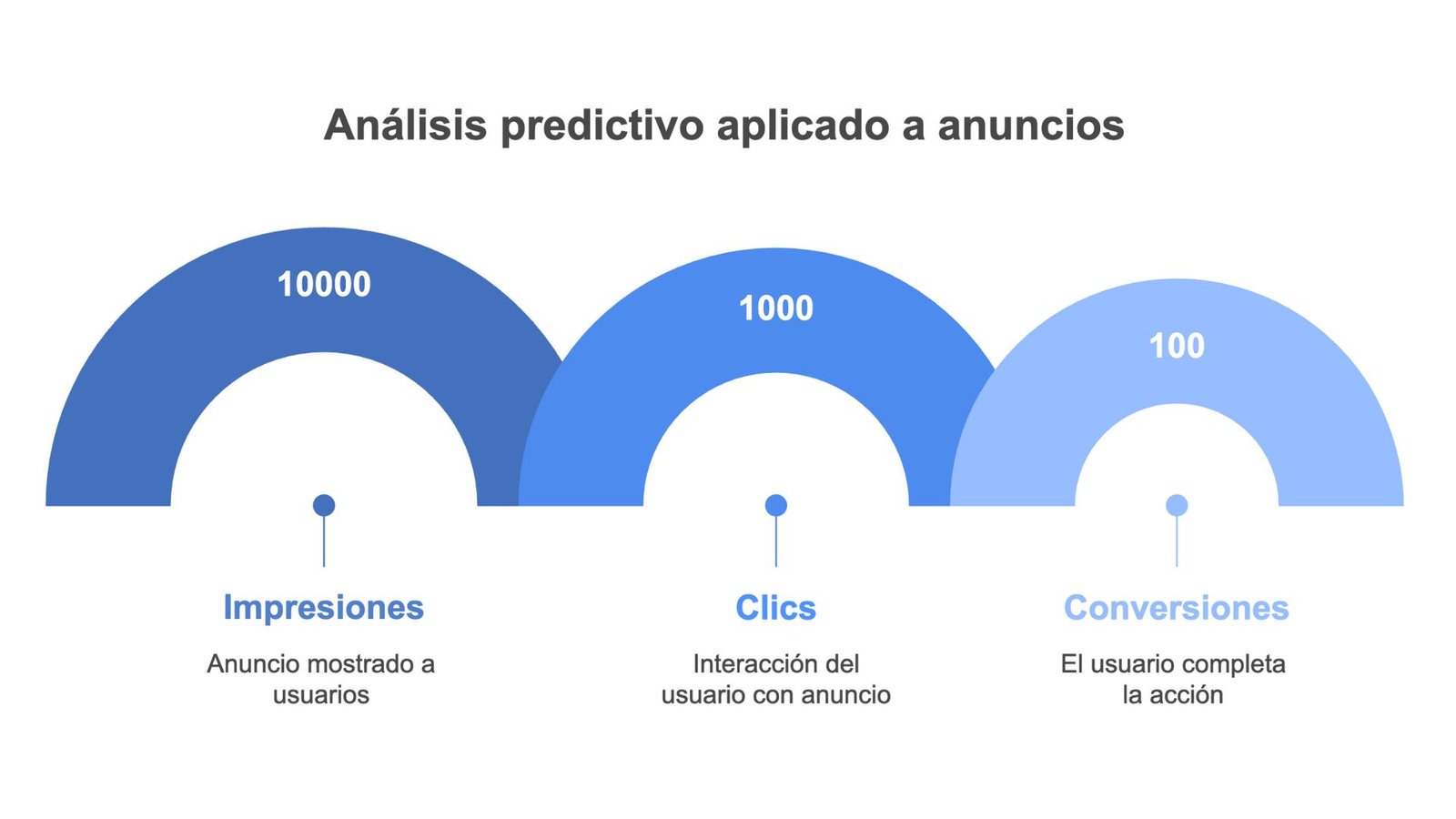
How to connect Ad Strength with real conversions
It’s not just about achieving “Excellent”. Compare Ad Strength to:
- Conversion Rate
- Quality Score
- CPA
- ROAS (Return on Ad Spend)
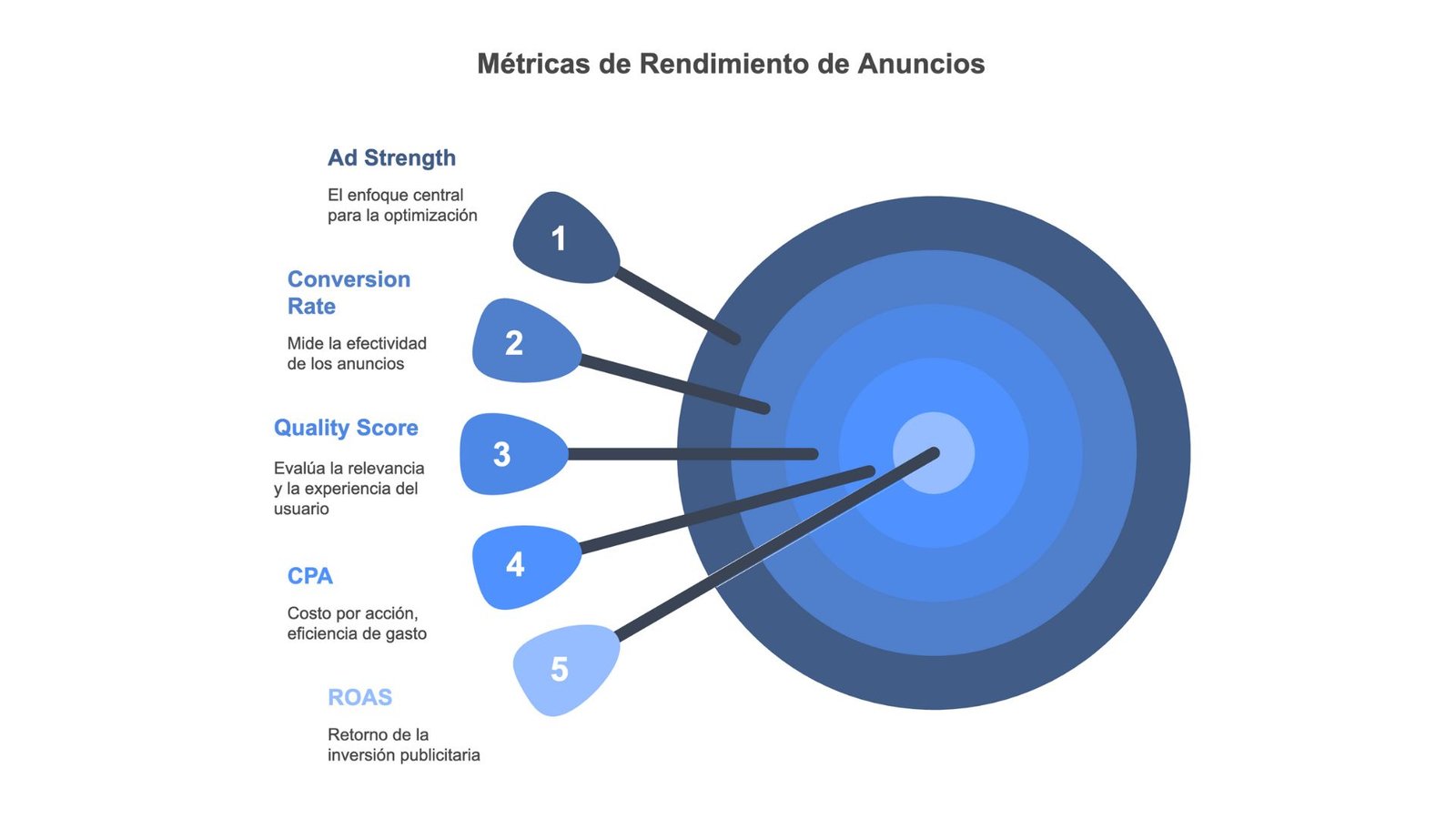
It establishes correlations. For example: a campaign with Ad Strength “Good” but high CTR and low CPA can be more profitable than one with Ad Strength “Excellent” but low conversion rate.
Combining these metrics helps filter out falsely positive results. Sometimes, a high Ad Strength score may not align with the business’s actual conversion goals. That’s why contextual analysis is important.
Tips:
- Use lookalike audiences with previous good results
- Create A/B tests with different assets
- Track daily performance by ad combination
- Use more accurate attribution models to understand which ad actually generated the conversion

Checklist for campaigns with high Ad Strength
- 12 unique headlines (variety of length and focus)
- 4 distinct descriptions (no repetitions)
- Variety of visual assets (images, logos, videos)
- Strategic use of relevant keywords
- Clear and conversion-focused CTAs (“Schedule a call,” “Request a demo”)
- Short videos of 10-30 seconds, optimized for mobile
- Monthly review of asset reports
- Ongoing optimization with A/B testing
- Landing pages aligned with the ad message
- Conversion tracking using GA4 and Tag Manager
- Semantic review of each headline and description
- Use of predictive tools for pre-launch modeling publication
How to align Ad Strength with the post-click experience
A good ad loses impact if the user reaches a poorly designed page. Therefore, the post-click experience must be consistent with the ad message and optimized for conversion.
Tips to improve the landing page:
- Short load times (less than 3 seconds)
- Titles consistent with the ad
- Simple forms and visible buttons
- Trust: badges, testimonials, reviews
- Responsive design and intuitive navigation
- Avoid distracting elements or intrusive pop-ups
- Integrate ad values with real benefits
- Personalize the page based on the displayed ad (Dynamic Landing Pages)
- Use heatmaps to identify drop-off points
- Create different landing pages for different ad combinations
- Adapt the design according to audience type (e.g., mobile vs. desktop)
Additionally, ensure that conversion values are tracked correctly using Google Ads conversion tags and tools such as Google Tag Manager or Google Analytics 4.

Trends for 2025: What’s Coming in Ad Strength
- Generative AI: Google is already testing systems that automatically generate titles, descriptions, and even images from your website content. This will streamline campaign creation but make review and personalization more important.
- Advanced Predictive Models: More robust machine learning integration is expected to suggest ad combinations before launching a campaign. This will reduce trial and error time and increase creative efficiency.
- Greater Integration with Google Analytics 4: The connection between ad performance and post-click user behavior will be clearer and more automatic. This will facilitate data-driven decision-making.
- Cross-platform creative automation: Ad creation will automatically adapt to various formats and placements, such as YouTube Shorts, Discover, and Gmail Ads, increasing reach without sacrificing personalization.
- New visual performance indicators: Google Ads will implement more interactive dashboards that display visual insights into assets, enabling rapid, real-time, data-driven action.
- Advanced intent-based targeting: Search signals will be combined with past behavior to show ads to users at key stages of the funnel.
- Greater role for A/B experiments: New automated experiments will allow for easier and faster comparison of ad versions across different assets and strategies.
- AI-powered automated copy with control Creative: Variables such as tone, focus, length, and language can be customized within the same automated flow, without losing human control over the message.
Ad Strength in Google Ads is much more than a superficial evaluation metric. It’s a key indicator that reflects the quality, relevance, and versatility of ads in a highly automated ecosystem. The importance of this metric becomes even more critical as we move toward 2025, a year in which AI, predictive analytics, and automation will begin to dominate the digital advertising landscape.
Improving your Ad Strength is ultimately a strategy to maximize the effectiveness of your advertising campaigns. Ads with high Ad Strength have a greater potential to achieve better positions, receive more relevant clicks, and therefore generate higher-quality conversions. Furthermore, optimizing ad assets, such as headlines, descriptions, and visual assets, is an ongoing process that must align with the post-click user experience, ensuring that users not only click on your ads but also take the desired actions on your website.
It’s crucial that you don’t ignore the importance of Ad Strength in your Google Ads campaigns. Neglecting it can limit your reach and unnecessarily increase acquisition costs. On the other hand, applying recommended best practices, such as varied headlines and descriptions, the use of relevant visual assets, and strategic keyword integration, will put you well on your way to optimal ad performance.
The future of digital advertising is marked by the integration of AI and machine learning to improve ad personalization, which will make Ad Strength even more crucial.
Remember that for successful campaigns, Ad Strength must be accompanied by an optimized landing page, accurate conversion tracking, and a clear understanding of your audience. Only then will you be able to connect effectively with your potential customers and maximize your return on investment.
Are you ready to improve the Ad Strength of your campaigns?
If you want your ads to reach their full potential, don’t let your Ad Strength be overlooked. Start applying best practices and optimize your ad assets today. If you need help designing more effective Google Ads campaigns or want to take your ads to the next level, contact us and let our team of experts help you improve your results!