On-Page SEO: Keys to optimizing your website and improving your ranking
AuthorEdwin Ruiz
Published
Optimizing your website for search engines is essential to improving its visibility. On-page SEO is one of the fundamental pillars of a successful SEO strategy.
What is on-page SEO and its impact on website ranking?
On-page SEO refers to all the optimization actions you can implement within your own website. This includes everything from written content and images to URL structure and HTML tags. Unlike off-page SEO, which relies on external factors such as links from other websites, on-page SEO focuses on optimizing the elements within your site to help search engines understand what your page is about and rank it appropriately.
The impact of proper on-page optimization is direct: it improves your page’s relevance for search queries, which can boost its position in search engine results and, consequently, drive more organic traffic. In 2025, on-page SEO remains one of the most effective tactics for achieving strong search engine rankings.
Best practices for titles, meta descriptions, and H1 tags
Titles (heading tags)
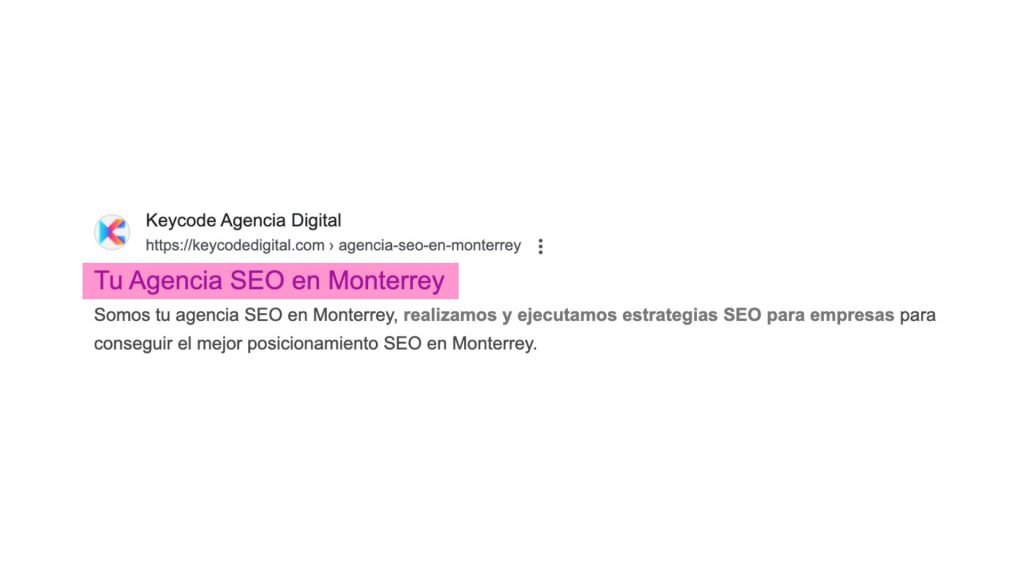
Your page title is one of the most important factors for on-page SEO. Search engines use it to understand what your content is about, and it’s what users will see in search results.
Best practices for titles:
Include the primary keyword: Make sure your title contains the main keyword you are trying to rank for, preferably near the beginning.
Optimal length: Titles should be between 50 and 60 characters long to avoid being truncated in search results.
Engaging for users: Your title should be clear, compelling, and accurately reflect the content of the page.
Meta descriptions
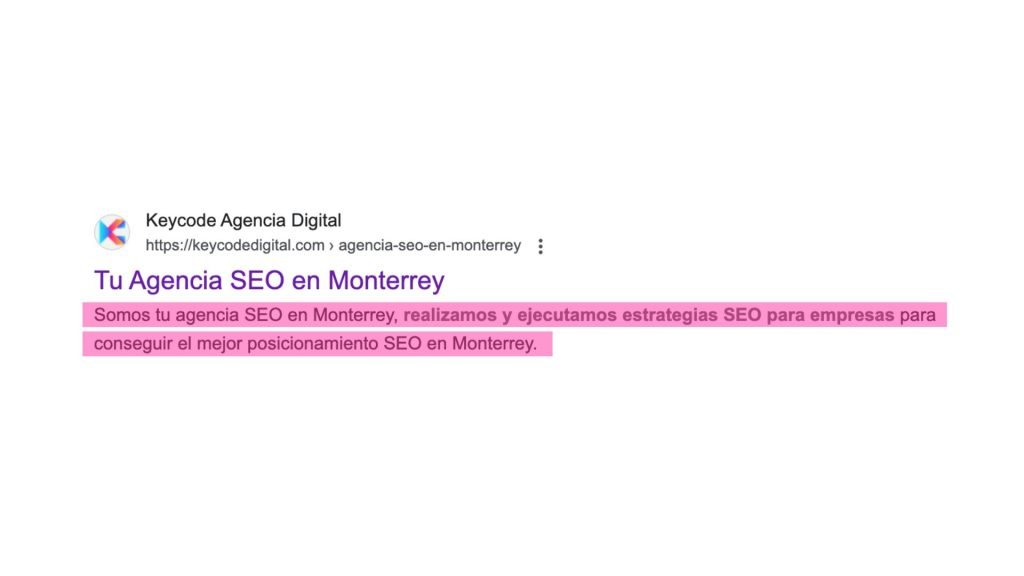
The meta description is the text that appears below the title in search engine results. While it does not directly affect rankings, a well-written meta description can increase the click-through rate (CTR), which can indirectly improve your SEO performance.
Best practices for meta descriptions:
Provide a clear content summary: Write a concise and compelling summary that encourages users to click.
Include secondary keywords: Whenever possible, incorporate variations of your primary keyword.
Ideal length: The meta description should be between 150 and 160 characters long.
H1 Tags
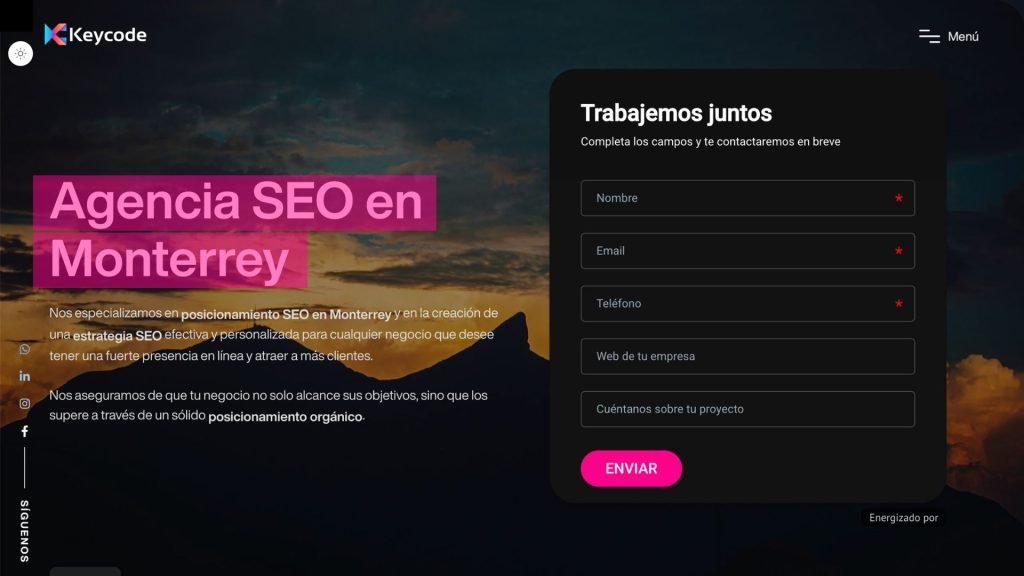
The H1 tag is the main heading of the page and should be unique and reflect the main topic of the content.
Best practices for an H1 tag:
Use only one H1 tag: Include a single H1 tag per page to define the main topic.
Include the primary keyword: Make sure your H1 contains the relevant target keyword.
Clarity: The H1 should clearly and specifically describe the topic covered on the page.
How to optimize images, internal links, and content to improve on-page SEO
Images are essential to the user experience, but they can also affect your page’s loading speed if they are not properly optimized.
Image Optimization
Images are essential to the user experience, but they can also affect your page’s loading speed if they are not properly optimized.
Best practices for images:
Use relevant file names: Choose descriptive file names and include related keywords whenever appropriate.
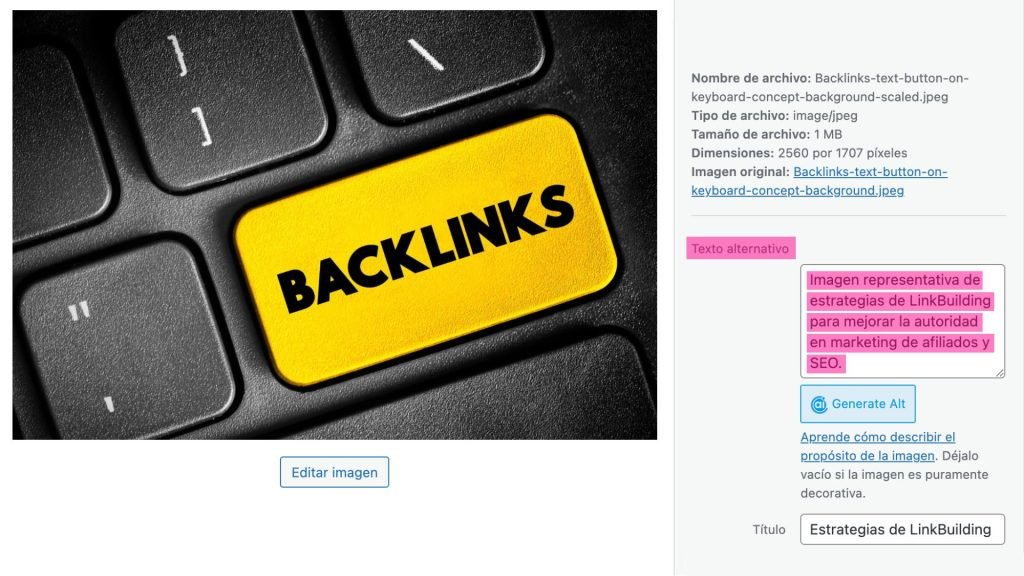
Alt text: Alt text is important for both accessibility and search engines. Make sure every image has relevant and descriptive alt text.
Image compression: Compress images to reduce file size without sacrificing quality, helping improve page load speed.
Internal links
Internal links help search engines understand your site’s structure and distribute page authority throughout your website.
Best practices for internal links:
Maintain a clear hierarchical structure: Use a logical internal linking hierarchy that makes navigation easier for both users and search engines.
Use descriptive anchor text: Choose relevant anchor text for internal links, ensuring it accurately describes the content of the destination page.
Avoid broken links: Perform regular audits to ensure that all internal links are functioning correctly.
Content Optimization
Content is still king in on-page SEO. Well-written and optimized content is crucial for achieving good results.
Best practices for content:
Proper keyword usage: Integrate your keywords naturally into the content without keyword stuffing.
Valuable and original content: Search engines prioritize unique, useful, and relevant content. Make sure your content provides real value to users.
Regular updates: Fresh content is favored by search engines. Update your content regularly to keep it relevant.
Improve your on-page SEO today!
If you want to improve your website’s performance and achieve better ranking on Google, it is essential to implement these on-page SEO practices. At Keycode SEO Agency in Monterrey, we can help you optimize all technical and strategic aspects of your website to achieve the best results.
Are you ready to take your website to new heights? Contact us today for a personalized consultation and start improving your on-page SEO. Don’t wait any longer to stand out in search engines!